%20--%3e%3cpath%20d='M59.1,199.2c1.4,12.4,17,19.5,35.9,19.5s25.9-1.8,37.8-5.5l6.6,35.7c-15.9,6.2-34.7,8.6-52.6,8.6-49.8,0-77.8-28.1-77.8-75.4s24.3-80.1,73.5-80.1,64.7,31.6,64.7,75.4-.9,17.9-1.8,21.8H59.1ZM99.2,163.4c0-10.5-3.6-26.3-19.2-26.3s-20.6,15.7-21.2,26.3h40.5Z'%20fill='%23231f20'/%3e%3cpath%20d='M203.7,105l13.8,62.4c2.8,12.8,4.8,25,6.7,38.1h.9c1.8-13.6,3.7-24.8,6.3-38.1l13-62.4h54.2l-50.2,149.7h-51.7l-49.8-149.7h56.8Z'%20fill='%23231f20'/%3e%3cpath%20d='M347,199.2c1.4,12.4,17,19.5,35.9,19.5s25.9-1.8,37.8-5.5l6.6,35.7c-15.9,6.2-34.7,8.6-52.6,8.6-49.8,0-77.8-28.1-77.8-75.4s24.3-80.1,73.5-80.1,64.7,31.6,64.7,75.4-.9,17.9-1.8,21.8h-86.2ZM387,163.4c0-10.5-3.6-26.3-19.2-26.3s-20.6,15.7-21.2,26.3h40.5Z'%20fill='%23231f20'/%3e%3cpath%20d='M451.4,155c0-18.7-.6-35.8-1.2-50h45.3l2.4,18.5h.9c6.3-9,20.3-21.6,42.6-21.6,33.9,0,50.2,24.4,50.2,62.8v90h-52.6v-84.8c0-15.1-5-25.2-17-25.2s-13.6,6.1-16.2,11.9c-1.2,2.7-1.8,7.3-1.8,11.9v86.3h-52.6v-99.7Z'%20fill='%23231f20'/%3e%3cpath%20d='M672.2,63.1v41.9h30.6v38h-30.6v48c0,17.4,5.1,23.7,16.7,23.7s9.1-.5,12.4-1.1v40.2c-6.2,2-17.7,3.7-31.1,3.7s-27.7-4.8-35.7-12.5c-9.1-8.9-14-22.8-14-46.2v-55.9h-18.1v-38h18.1v-30.3l51.6-11.6Z'%20fill='%23231f20'/%3e%3cpath%20d='M773.7,49.6v205.1h-52.6V49.6h52.6Z'%20fill='%23231f20'/%3e%3cpath%20d='M964.1,291.7c-26.4-8.6-48.4-18.3-74.1-30.2-4.7-2.3-9.5-3.4-13.5-3.8-44.5-2.4-82.8-38.1-82.8-104.6s33.3-106.6,93.1-106.6,89.2,53,89.2,102.5-17.4,77.6-39.6,89.2v1.4c13.4,4.8,28.7,8.4,43.5,12.3l-15.8,39.8ZM920.6,151.3c0-36.6-12.7-62.1-35.5-62.1s-36.2,25.8-36,62.5c-.3,38.6,13.4,63.3,36,63.3s35.5-24.7,35.5-63.8Z'%20fill='%23231f20'/%3e%3c/svg%3e)
 Türkçe
 English
Does your event need an app? How to create an experience attendees actually use
Decide if your event needs an app based on what attendees will do: personal schedules, networking, live polls and real-time AI translation.
Burcu Çetin
Contents
- Key takeaways
- Does your event need an app?
- When are a website and email enough?
- When does an event app add value?
- A high-quality interface is essential to adoption
- The app should evolve with the event
- Give attendees a clear reason to download
- Build app use into the event programme
- In eventIQ, the website and app share the same registration data
- How does the experience continue after the event?
- Frequently asked questions
- Make the decision for your next event
You’ve built an event app. Added the agenda, speakers and venue information. Sent attendees the download link. But on the day, questions still go to the registration desk and announcements circulate in WhatsApp groups. The app gets opened once, then forgotten.
At another event, attendees keep coming back to the app: to check their personal schedule, ask a speaker a question, follow live translation, connect with other attendees or view the latest event stories.
The difference goes beyond the size or duration of the event. Attendees need a reason to open the app, a good experience when they use it and something that makes them want to return.
So the decision starts with two questions: What will attendees do in the app? And what will that experience feel like?
Key takeaways
- The need for an app depends more on attendee needs than on event duration.
- A website and email may be enough for registration, essential information and an entry QR code.
- Personal schedules, networking, live interaction and real-time AI translation give attendees compelling reasons to use an app.
- A high-quality interface is essential to adoption.
- An activity feed and stories help the app stay alive as the event unfolds.
- In eventIQ, registration, the event website, check-in and the mobile app work from the same attendee data.
Does your event need an app?
Start by looking at the event through an attendee’s eyes. From the invitation to the final follow-up, what information will they need? When will they make choices, participate or contact someone?
These questions provide a useful starting point:
- Will attendees have personal schedules or session selections?
- Will they need to return to information and content throughout the event?
- Are live polls and Q&A an important part of the programme?
- Are attendees expected to discover and connect with one another?
- Do attendees speaking different languages need to follow what is being said on stage?
- Will particular attendee groups need targeted updates?
- Do you need a space for ongoing content and interaction before, during and after the event?
The number of “yes” answers matters less than the importance of each need. Sharing a presentation afterwards may not justify an app. Helping an international audience follow a talk through live translation could be a compelling reason on its own.
A half-day meeting in a single room can benefit greatly from an app. A multi-day event might be well served by a website and email. The experience you want to create should guide the decision.
When are a website and email enough?
If attendees simply need to register, find the event details and show a QR code at the entrance, a website and email can provide a straightforward experience.
The essentials are clear:
- A registration form that is easy to complete on a phone.
- Clearly presented dates, times, venue details and travel information.
- A branded confirmation email containing the entry QR code.
- Timely reminders.
- Post-event thank-you messages, content and feedback requests.
A short briefing or an invitation-only event with limited interaction can work well this way. Asking attendees to download an app just to find the address or retrieve their QR code may add an unnecessary step.
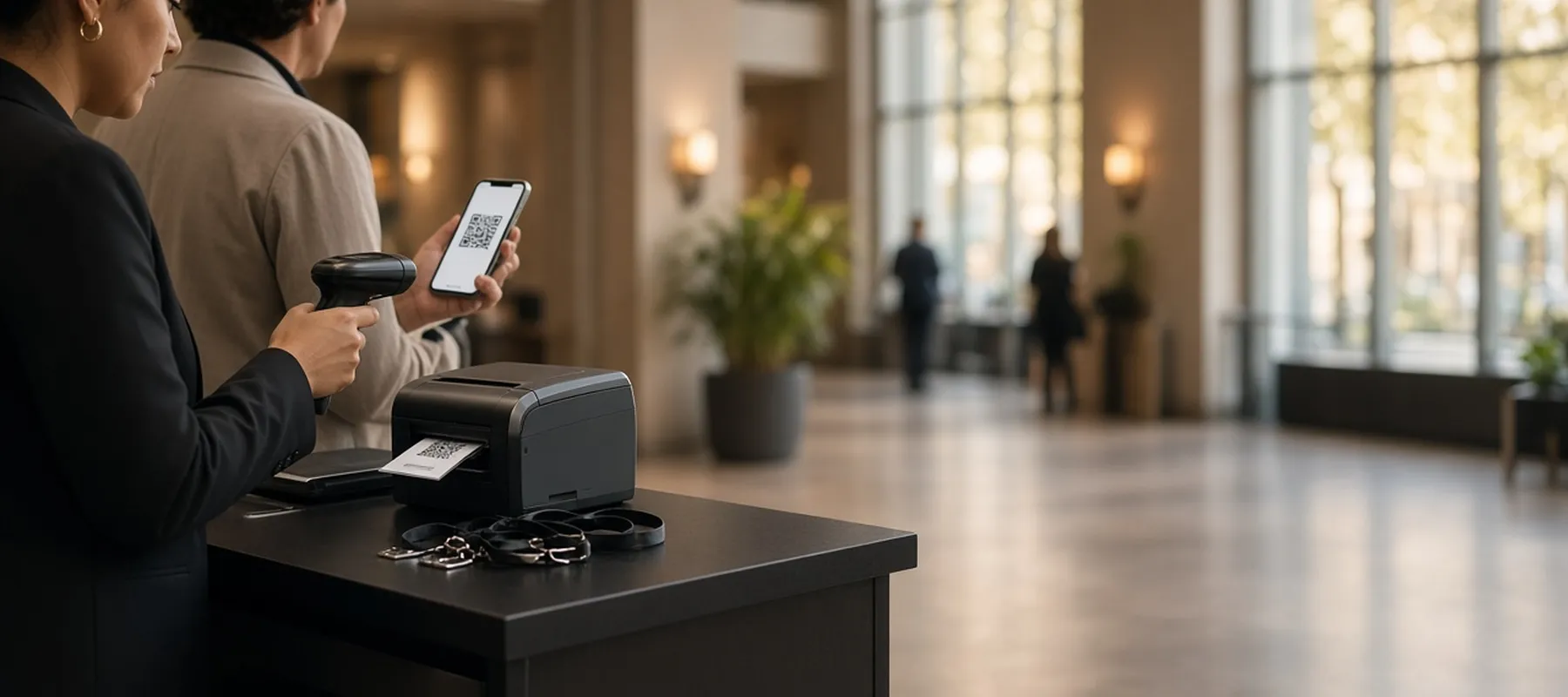
In eventIQ, the information collected through registration and RSVP is also used at check-in. Attendees can show the QR code from their confirmation email, and staff can search by name when needed. Registration and entry continue to use the same data, whether or not the event has an app.
When does an event app add value?
An app earns its place when it helps attendees participate and makes the experience richer. That can take several forms.
Personal schedules and content
When an event has parallel sessions, different attendee groups or individual itineraries, everyone needs something slightly different.
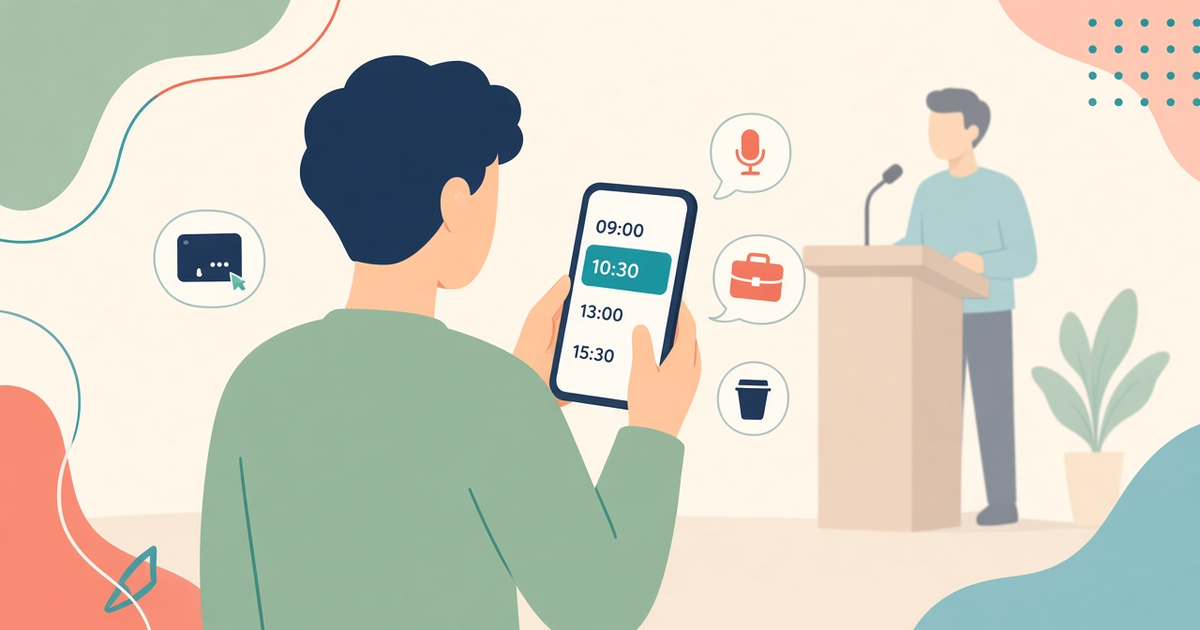
Bringing an attendee’s sessions and relevant information together makes the event easier to navigate. They do not have to keep finding their place in the full agenda.
In eventIQ, information and session choices collected during registration can be used in the app. The choices attendees make when registering carry through into their event experience.
Live polls and Q&A
Even a company meeting held in a single room can benefit from active participation. Submitting questions, responding to live polls and discussing the results give attendees practical reasons to use the app.
These features need to be planned alongside the programme. How will the moderator invite participation? When will questions be answered? How will poll results influence the discussion?
Interaction becomes meaningful when attendees can see their contributions making a difference.
Real-time AI translation
At a meeting with an international speaker, or an event bringing together people from different countries, understanding the language on stage is a fundamental need.
eventIQ’s real-time AI translation lets attendees follow talks in different languages through the app. In this setting, the app’s value is independent of the number of rooms or the length of the event: it helps people understand the content.
When assessing whether you need an app, consider the languages your attendees speak and those your speakers will use.
Networking and new connections
For some attendees, the most valuable outcome is meeting a potential customer, partner, colleague or expert. Being in the same venue does not guarantee that the right people will find each other.
eventIQ’s networking features help attendees discover other participants, explore profiles and get in touch. They can start identifying people they would like to meet before the event begins.
Details such as company, role, expertise and interests make that discovery easier. Setting aside time for networking and explaining how attendees can use the available tools are also part of the experience.
Easy access to current information
Bringing venue maps, session materials, announcements and programme changes together reduces the effort needed to find information.
This can be particularly useful at multi-room or multi-day events. Attendees can locate their next session, find relevant materials and keep track of updates that affect them.
A high-quality interface is essential to adoption
Attendees open your event app with expectations shaped by the apps they use every day. They expect smooth interactions, clear navigation, strong visuals and easy access to what they need.
A dull, dated or confusing interface can get in the way of useful features. If attendees cannot work out where to go, or nothing on the home screen catches their attention, they have little reason to return.
Design therefore goes well beyond adding the event logo and brand colours. What the home screen highlights, how content is presented, the quality of the imagery and the flow between screens all need consideration.
Good event app design creates excitement and curiosity. It conveys the atmosphere of the event and makes people, content and experiences inviting to explore.
Attendees should be able to find their schedule easily, access translation without difficulty and notice fresh content. When visual quality and usability work together, the app feels like a carefully considered part of the event.
The app should evolve with the event
An app that is populated with an agenda and speaker biographies, then left untouched, gives attendees limited reasons to come back. As the event progresses, the app needs fresh content and interaction.
eventIQ’s activity feed and stories support this ongoing activity. Event preparations, speaker content, moments from the venue and highlights can appear in the app, giving attendees a sense of what is happening now.
That flow can begin before the event. Behind-the-scenes images and short previews can build anticipation. During the event, timely posts keep the experience current. Afterwards, highlights and materials can extend it.
But enabling a feed and stories is only the beginning. Decide who will create content, what they will share and how the feed will stay up to date. A stream of repetitive announcements or sponsor messages alone is unlikely to hold attention.
Give attendees something new to return for: an interesting post, someone worth meeting, an opportunity to participate or a moment they do not want to miss.
Give attendees a clear reason to download
“Our event app is now available” is an announcement. It does not explain why an attendee should download it.
Frame the message around what they can do:
- Build and follow your personal schedule.
- Discover people you would like to meet.
- Send questions to speakers.
- Take part in live polls.
- Follow talks with real-time AI translation.
- Explore the latest event posts and stories.
Choose the strongest reasons for your event and communicate them at the right time. Introduce networking before the event, explain translation before a session begins and invite poll participation through the moderator.
QR codes and agendas are useful too. But if the QR code is already in the confirmation email, it may be a weak reason to download an app on its own. Attendees should find more when they open it.
Build app use into the event programme
Adoption depends on more than pre-event emails. Plan where and how the app will be used during the event.
If you are running a live poll, make room for it in the presentation. If questions will come through the app, the moderator should explain the process and use the submissions. Attendees who need translation should know how to access it in advance. Feed posts and stories should keep pace with the event.
For critical announcements, make sure the message reaches everyone who needs it. A room change cannot reach only those who downloaded the app. Support app notifications with email, venue signage and staff communication where needed.
In eventIQ, the website and app share the same registration data
A smooth attendee experience also depends on consistent information behind the scenes. When registrations, session choices and attendee details sit in different systems, keeping them current may require integrations or regular data transfers.
In eventIQ, registration, the event website, check-in and the mobile app work from the same attendee data. You do not need to collect the information again for the app or manually transfer attendee lists.
For example, a session selected during registration can appear in the attendee’s personal schedule in the app. When attendee information changes, teams do not have to update separate lists one by one.
The app’s appearance and content can also be adapted to your event. The agenda, speakers, sponsor content and announcements are managed within the same platform.
This gives teams running different events throughout the year flexibility. One meeting might use a website and email, while another puts the app at the centre of the experience with networking, live interaction, translation and fresh content.
How does the experience continue after the event?
If attendees actively used the app during the event, it can be a natural place to return for presentations, session recordings and feedback surveys. They can revisit connections and look back at shared event moments.
That continuation needs a purpose. What will you offer attendees? Which content will bring them back? How will you sustain the connections made at the event?
For an event delivered through a website and email, follow-up can continue through those channels. Asking attendees to download a new app solely to retrieve a post-event file may not be worthwhile.
Frequently asked questions
Does a one-day event need a mobile app?
It can. If personal schedules, networking, live interaction or real-time AI translation meet important needs, an app can add value to a one-day event. If attendees only need essential information and an entry QR code, a website and email may be enough.
Does app design affect usage?
Design shapes attendees’ first impressions and how they move through the app. A modern, clear and visually engaging interface makes exploration easier. A confusing or dated design can make even useful features difficult to find.
What do an activity feed and stories add?
They bring the unfolding event into the app. Preparations, speaker content and moments from the event give attendees fresh reasons to return. This requires a content plan and regular updates.
Does eventIQ offer live translation?
Yes. eventIQ’s real-time AI translation lets attendees follow talks in different languages through the app.
Can attendees check in without the app?
Yes. Attendees can show their QR code from a confirmation email or printed ticket. Staff can also find them by name.
Make the decision for your next event
Write down what you expect attendees to do on their phones at your next event. Consider how important each need is and how often it will arise.
Then look at the app through an attendee’s eyes. What will they see when they first open it? What will they be able to do easily? How will the design make them feel? What will have changed when they return a few hours later?
An app that offers practical value, sparks curiosity through its design and stays alive throughout the event can become a powerful part of the attendee experience.
In an eventIQ demo, you can explore these needs using your own event programme and see how registration, the website, check-in and the mobile app work together.
Get started
See eventIQ in action
A tailored walkthrough of the Experience Engine and Business Engine, with clear next steps if it's a fit, and an honest no if it isn't.